
This guide is for you if:
- You’re choosing a business hotel chain in Japan and want to compare them side by side
- You want to see what the rooms, breakfast, and facilities actually look like
- You care about specific things — free breakfast, public bath, late checkout — and want to know which chain delivers
- You’ve heard of Dormy Inn’s free ramen or Super Hotel’s pillow bar and want the full story
Japan has over a dozen major business hotel chains, and they’re not interchangeable. Each one has a distinct personality — a different answer to the question “what matters most when you’re staying overnight?” Some bet on breakfast. Some bet on bathing. One gives you free ramen at midnight.
Here’s a detailed comparison of the chains you’re most likely to encounter, with photos so you can see what you’re actually getting.
- Quick Comparison: Japanese Business Hotel Chains
- APA Hotel — The Biggest Chain in Japan
- Toyoko Inn — The Reliable Workhorse Across All 47 Prefectures
- Dormy Inn — The One With the Hot Spring and Free Midnight Ramen
- Route Inn — The Breakfast Champion of Japanese Business Hotels
- Comfort Hotel Japan — Not the Comfort Inn You Know
- Super Hotel — The Pillow Menu and Organic Breakfast
- Four Points Flex by Sheraton — A Marriott at Business Hotel Prices
- Which Japanese Business Hotel Chain Should You Choose?
Quick Comparison: Japanese Business Hotel Chains
| Chain | Check-in | Checkout | Breakfast | Bath | Standout |
|---|---|---|---|---|---|
| APA Hotel | 15:00 | 10:00 | Paid | Some locations | Largest chain in Japan |
| Toyoko Inn | 15:00 | 10:00 | Free | No | 47 prefectures covered |
| Dormy Inn | 15:00 | 11:00 | Paid (regional) | Natural hot spring | Onsen + free ramen |
| Route Inn | 15:00 | 10:00 | Free (30+ items) | Yes | Best free breakfast |
| Comfort Hotel | 15:00 | 10:00 | Free | No | Library Cafe lounge |
| Super Hotel | 15:00 | 10:00 | Free (organic) | Some | Pillow bar |
| Four Points Flex | 15:00 | 11:00 | Varies | No | Marriott brand at budget prices |
APA Hotel — The Biggest Chain in Japan
APA is everywhere. With hundreds of properties across Japan, there’s almost always one near the station you need. The rooms are famously compact — even by Japanese business hotel standards — but they’re clean, functional, and competitively priced.
Some newer APA properties have impressive large communal baths, which is a nice upgrade from the standard unit bath in your room. Their app and direct booking platform guarantee the best rate, and their membership program offers perks like late checkout at higher tiers.
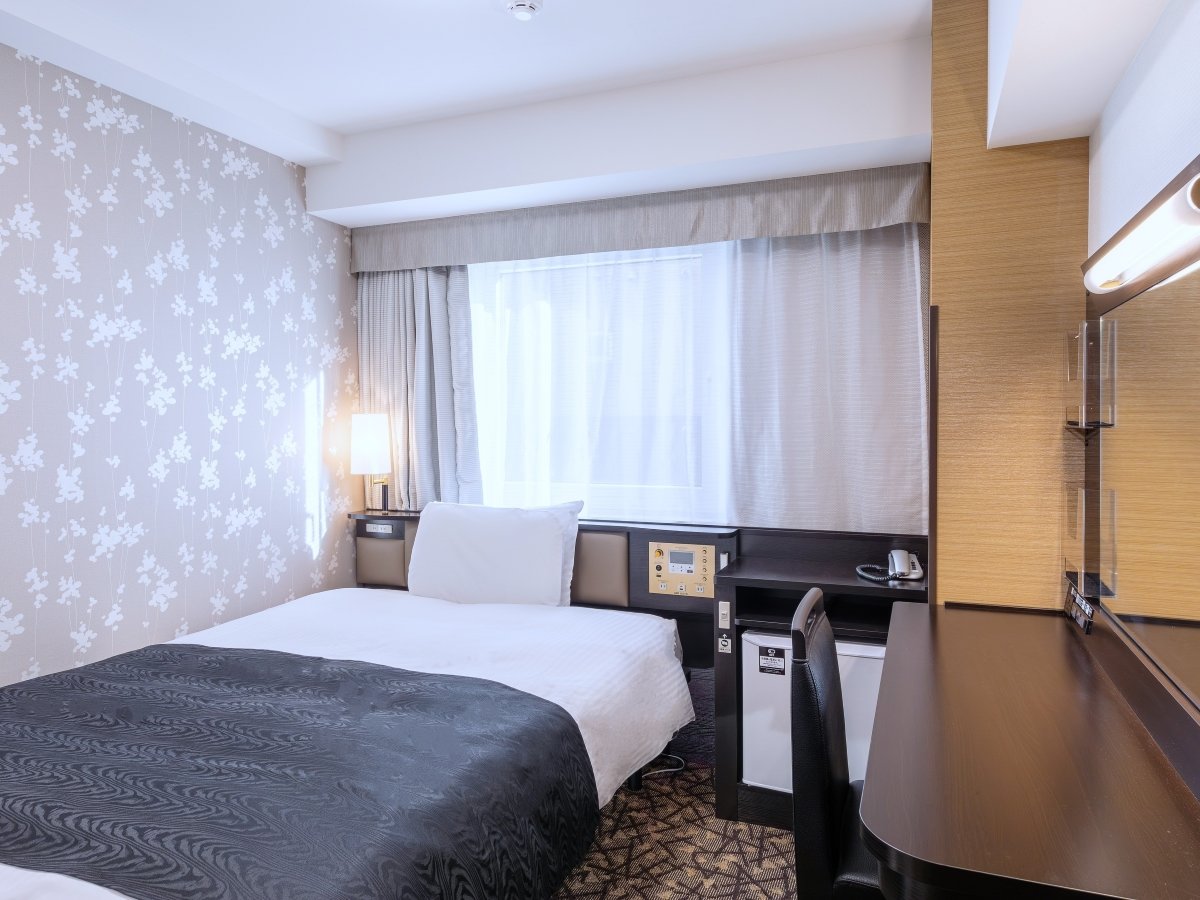
APA Hotel Sapporo Odori Ekimae Nishi
A compact single room — small but spotless, typical of APA Hotels across Japan.
Book on Expedia | Jalan
Jalan and Rakuten Travel are Japan’s two largest hotel booking platforms and are primarily in Japanese — your browser’s built-in translation (Chrome: right-click → Translate to English) handles them well, and the booking flow is straightforward once translated.
Toyoko Inn — The Reliable Workhorse Across All 47 Prefectures
Toyoko Inn is the default business hotel for many Japanese travelers, and for good reason: consistency. The rooms look the same whether you’re in Sapporo or Kagoshima. Free breakfast is included at every property. And as of February 2026, Toyoko Inn has achieved coverage across all 47 prefectures in Japan — the latest opening in Kochi completed the set.
The free breakfast is simple — rice balls, miso soup, bread, salad — but it’s there every morning at no extra charge. For travelers who just want something in their stomach before heading out, it does the job.
Toyoko Inn's free breakfast buffet — simple, consistent, always included. Photo: Yahoo! Travel
Book on Expedia |
Dormy Inn — The One With the Hot Spring and Free Midnight Ramen
If you stay at only one business hotel chain in Japan, make it Dormy Inn. Every property has a natural hot spring bath (onsen). Every night between 21:30 and 23:00, they serve free “yonaki soba” — a small bowl of ramen. The breakfast is paid (1,500–2,000 yen) but features regional specialties that you won’t find anywhere else at this price point.
In Hokkaido, that means a seafood rice bowl where you pile on as much ikura (salmon roe) as you want. In Nagoya, it’s hitsumabushi-style eel. In Aomori, it’s scallops from Mutsu Bay, igamenchi (a squid fritter unique to Tsugaru), and senbei-jiru — a hearty soup with rice crackers from Hachinohe.The breakfast alone is worth choosing Dormy Inn over other chains.
Checkout is 11:00 — a full hour later than most business hotels. That extra hour matters more than you’d think.
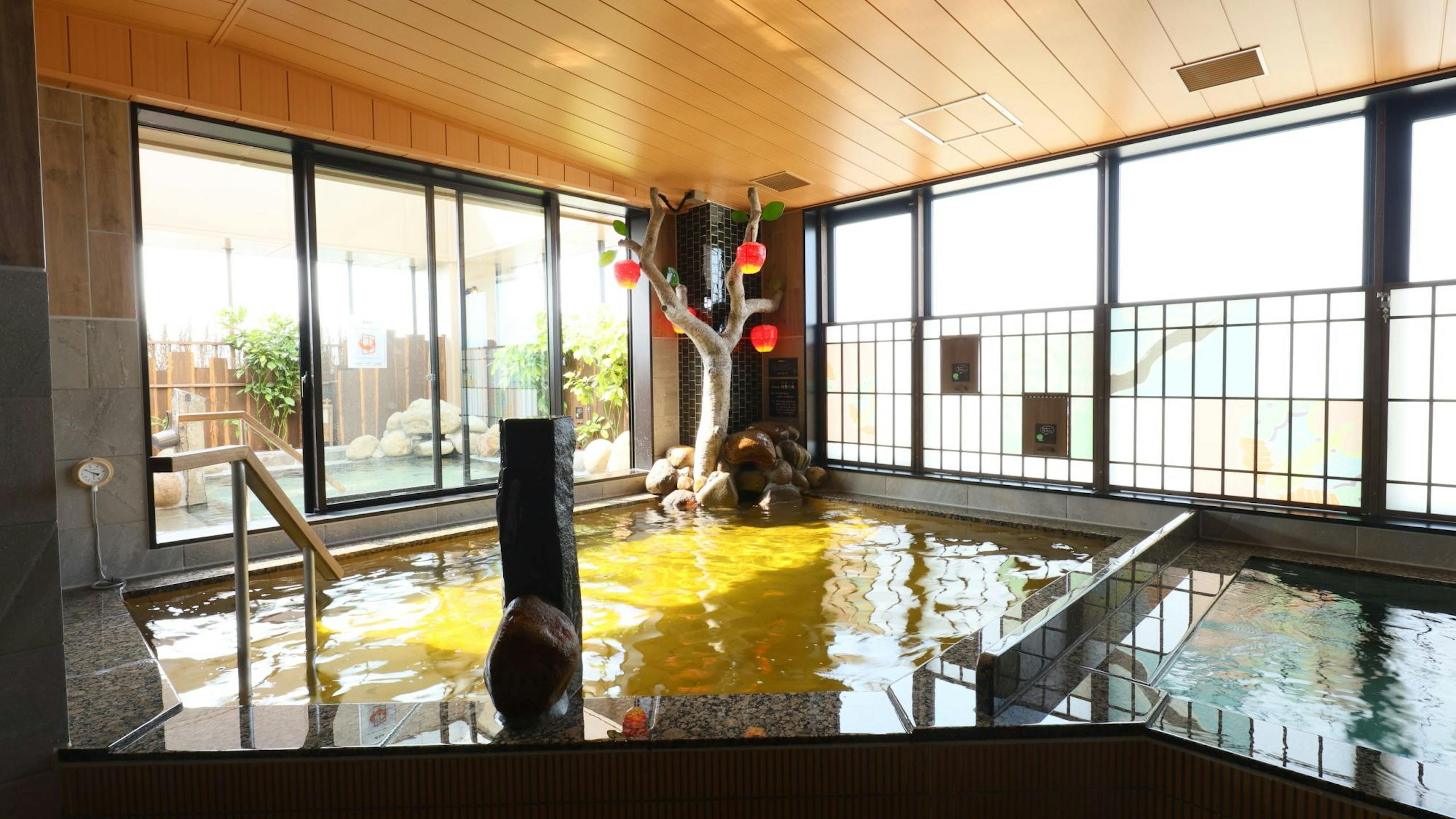
The onsen (hot spring bath) on the top floor. Photo: Ikyu
Book on Booking.com |
Dormy Inn also operates Nono (野乃), a Japanese-style sister brand with tatami-floored rooms and the same onsen and regional breakfast. If you want a ryokan-like experience at business hotel prices, Nono is the closest you’ll get.
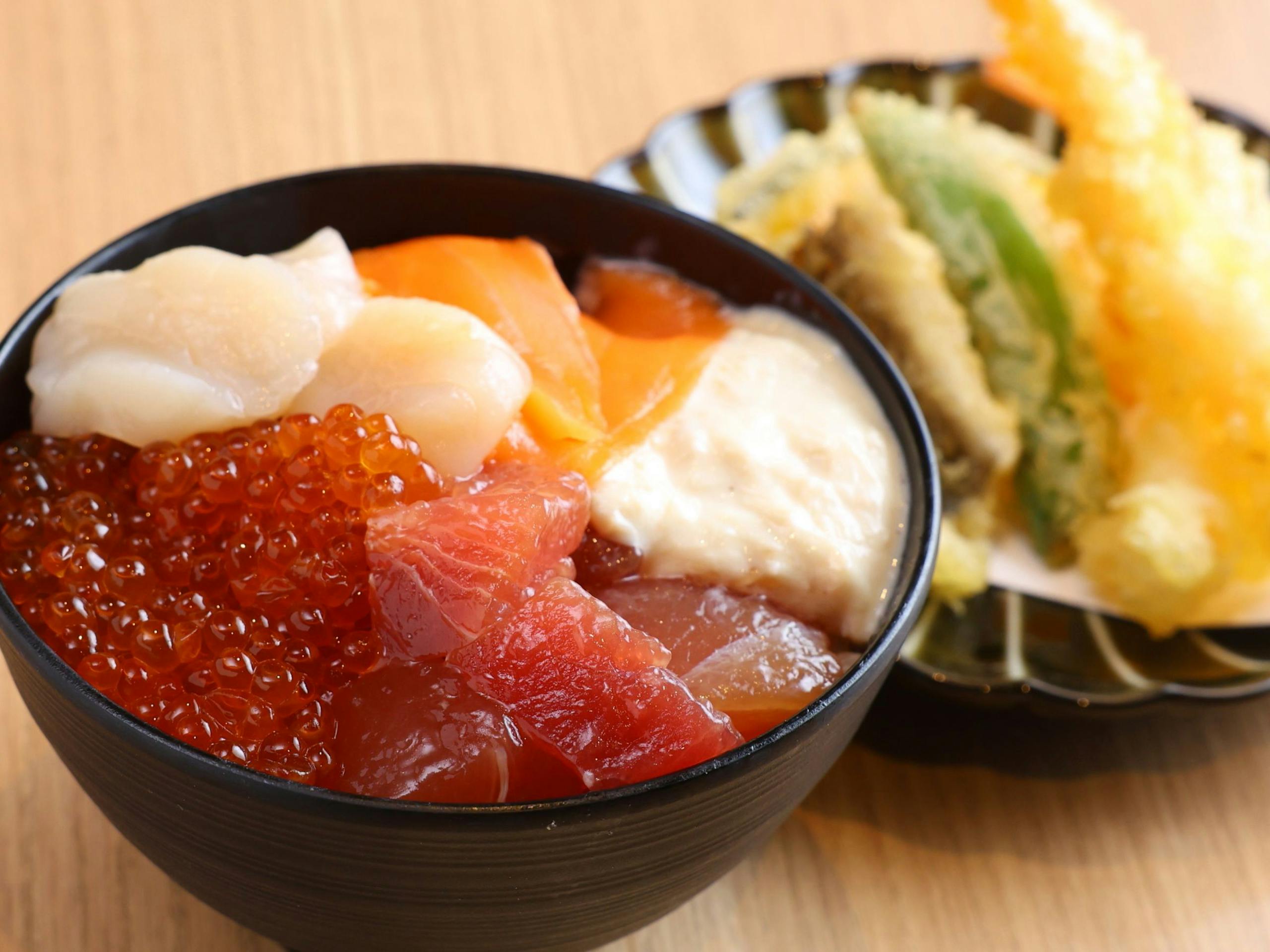
A seafood don with local Kyoto yuba (tofu skin) — part of Onyado Nono's regional breakfast buffet. Photo: Ikyu
Book on Expedia |
Route Inn — The Breakfast Champion of Japanese Business Hotels
Route Inn serves the most generous free breakfast of any business hotel chain in Japan: 30 or more items, both Japanese and Western, in a full buffet spread. If eating well in the morning is a priority, Route Inn is hard to beat — and you’re not paying extra for it.
Every property also has a large public bath, which is a step up from the tiny unit bath in your room. Route Inn is less well-known among foreign visitors, but Japanese business travelers know it well. It’s a workhorse chain that quietly delivers on the fundamentals.

Route Inn's free breakfast buffet — 30+ items with a focus on healthy options including fresh salads.
Book on Expedia |
Comfort Hotel Japan — Not the Comfort Inn You Know
If you’ve stayed at a Comfort Inn in the United States, forget everything you expect. Comfort Hotel in Japan is part of the Choice Hotels family in name, but the experience is entirely different. The rooms are clean and well-maintained, the free breakfast is varied and fresh, and the Library Cafe lounge offers a genuinely pleasant workspace with free drinks.
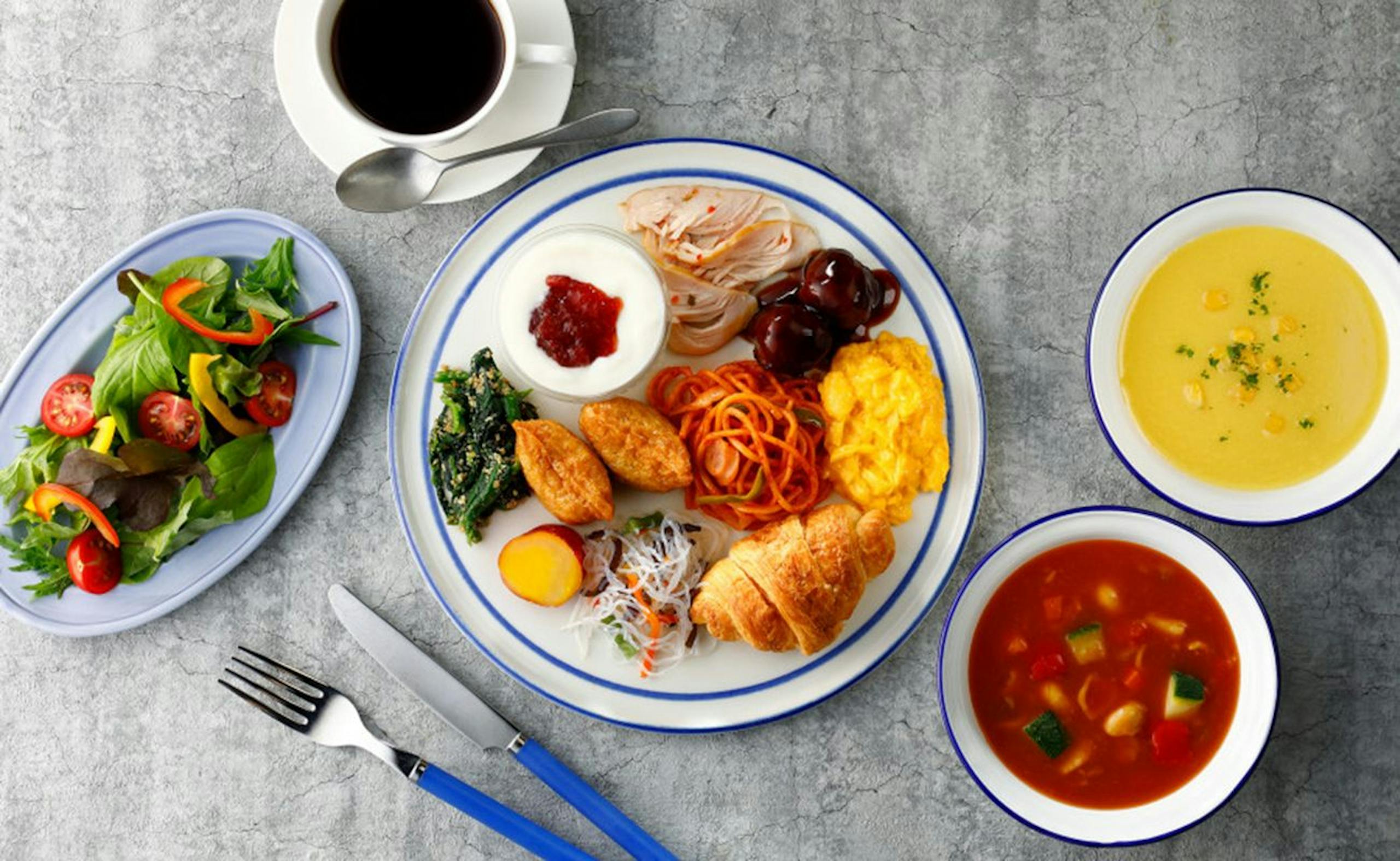
The breakfast leans Western — bread, salad, soup, sausage — but Japanese options like rice and miso soup are also available, so it works for a wide range of preferences. For travelers who want flexibility without surprises, Comfort Hotel is a reliable choice.

Comfort Hotel's "Color your Morning" breakfast — a Western-style spread that feels nothing like the US Comfort Inn.
Book on Hotels.com |
Super Hotel — The Pillow Menu and Organic Breakfast
Super Hotel’s signature feature is something you won’t find at any other chain: a pillow bar. In the lobby, you’ll find a selection of 8 different pillows — varying in firmness, height, and material — and you pick the one that suits you. It sounds like a small thing, but after a long day of travel, sleeping on a pillow that actually fits your preference makes a real difference.
The free breakfast uses organic vegetables and freshly baked bread. Some properties also have a natural hot spring bath. Super Hotel tends to attract health-conscious travelers who care about sleep quality and food ingredients.
Super Hotel’s pillow bar — 8 types of pillows to choose from. Find the one that fits you.
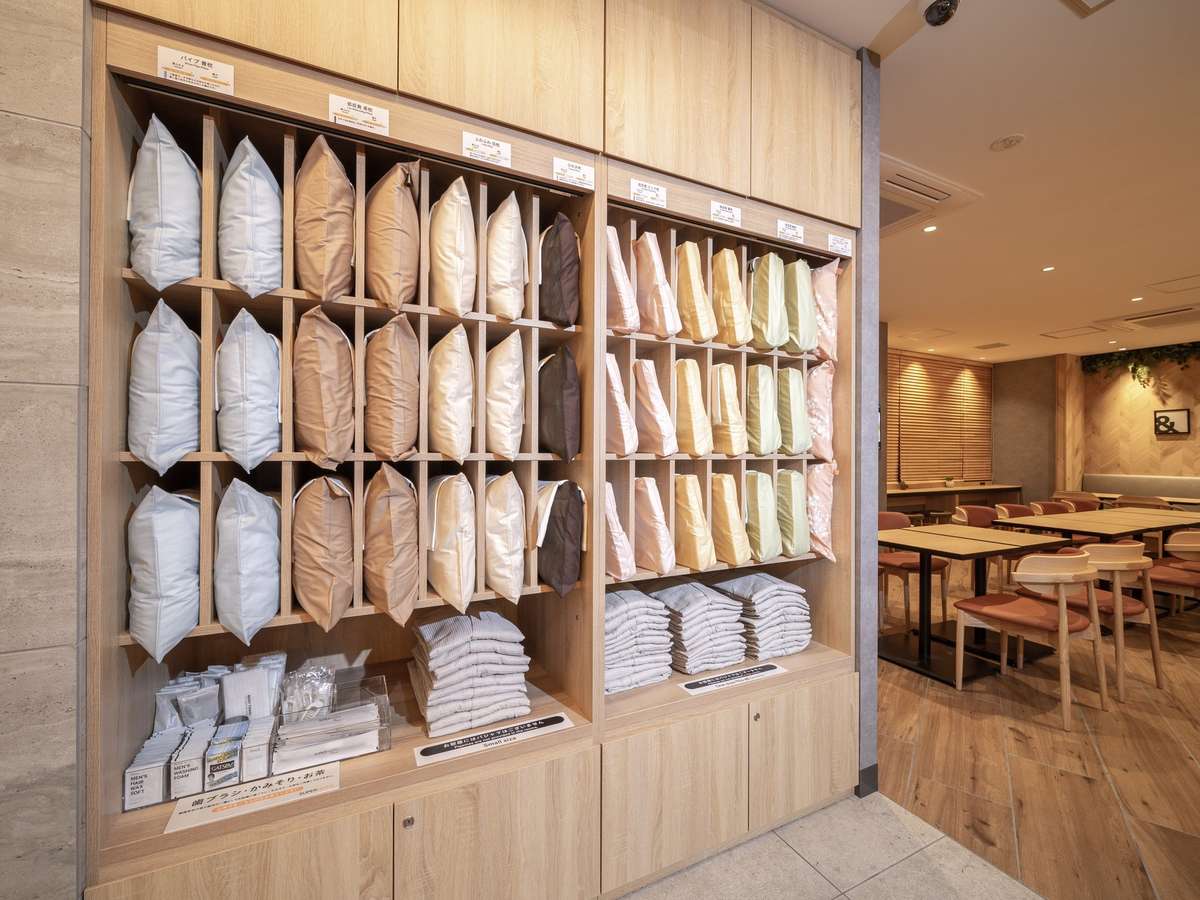
Choose from 8 types of pillows for your perfect night's sleep — Super Hotel's signature pillow bar.
Book on Expedia |
Vending machines and coin laundry — standard facilities you’ll find at most Japanese business hotels. No need for a minibar when beer is 250 yen from the machine.
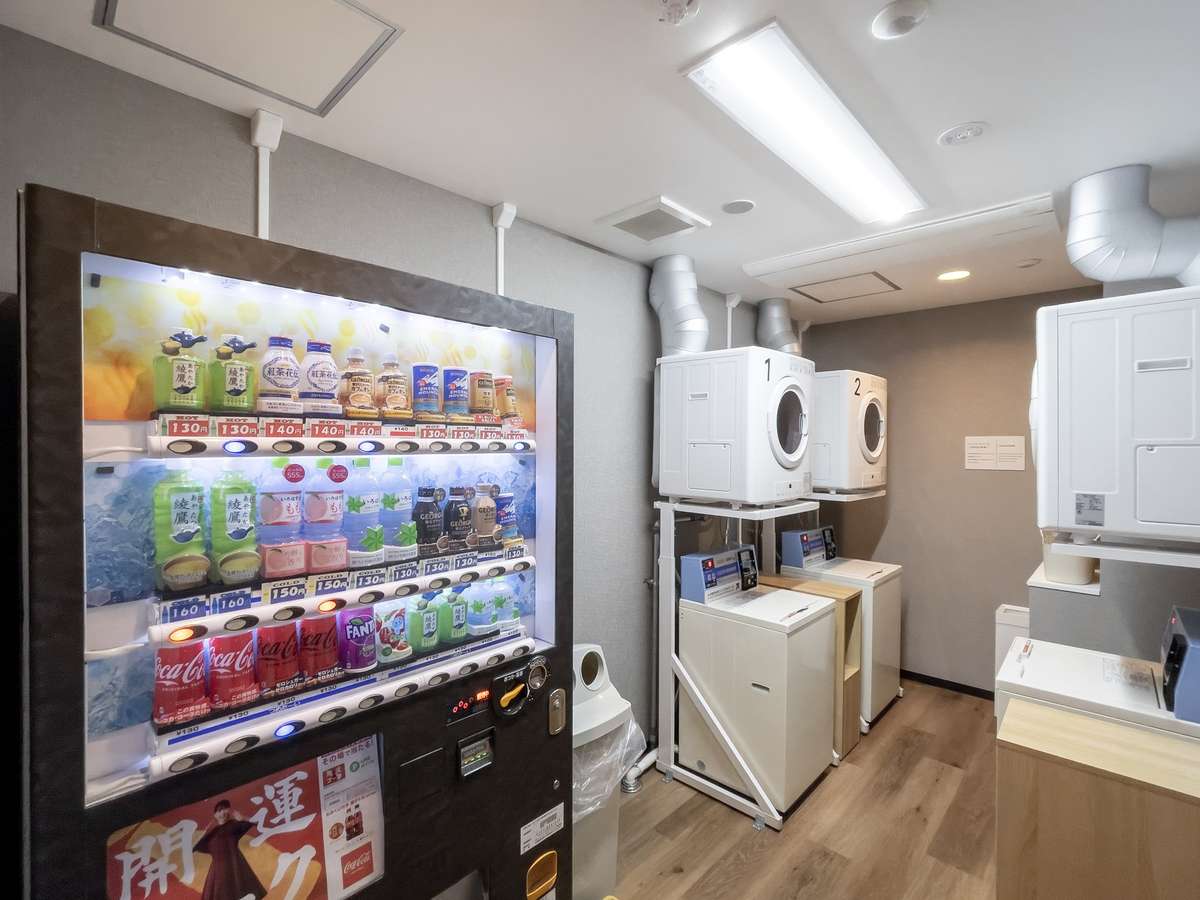
Vending machines and coin laundry
Book on
Four Points Flex by Sheraton — A Marriott at Business Hotel Prices
Yes, this is a Marriott brand. No, it’s not what you’d expect.
Four Points Flex by Sheraton is Marriott’s entry into Japan’s business hotel market. Most properties were formerly UNIZO Hotels — a well-regarded mid-range Japanese business hotel chain — renovated and rebranded under Marriott’s standards. The rooms are compact, the prices are reasonable, and — here’s the part that surprises everyone — breakfast varies by location: some properties serve a bento-style set breakfast (a boxed meal with grilled salmon, rice, and sides), while others have a Matsuya beef bowl restaurant on the ground floor as their dining option.
The CEO of Marriott International, Anthony Capuano, described the concept as being for guests who need “a clean bed and fast Wi-Fi.” That’s exactly what you get. If you’re a Marriott Bonvoy member, your points and status work here — elite benefits at business hotel prices.
As of late 2024, the Osaka Umeda property became Marriott’s 100th hotel in Japan. The chain has expanded to Tokyo, Yokohama, Kyoto, Nagoya, Hakodate, Kanazawa, Kobe, and Hakata, all in station-adjacent locations.

bento-style set breakfast
Book on agoda | Marriott International
Which Japanese Business Hotel Chain Should You Choose?
Quick decision guide
- Best overall experience: Dormy Inn — onsen, regional breakfast, free ramen, 11:00 checkout
- Best free breakfast: Route Inn (30+ item buffet) or Toyoko Inn (simple but free)
- Best for relaxation: Dormy Inn or Super Hotel (some with hot spring)
- Most locations: APA Hotel and Toyoko Inn — near almost every major station
- Most accessible for international visitors: Comfort Hotel (breakfast includes both Western and Japanese options, Choice Hotels brand)
- Best for Marriott members: Four Points Flex by Sheraton (Bonvoy points and status apply)
- Best for sleep quality: Super Hotel (pillow bar + organic breakfast)
- Best for ryokan vibes on a budget: Nono by Dormy Inn (tatami rooms + onsen)
The good news: the quality floor across all these chains is remarkably high. You’re unlikely to have a bad experience at any of them. The choice comes down to what you value most — food, bathing, price, or location.
For a broader overview of Japanese business hotels — what they are, how to book, and what to expect — see the main guide:
Japanese Business Hotels: A Practical Guide for Foreign Travelers
For a deeper look at breakfast options across chains:
Japanese Business Hotel Breakfast: Free, Paid, or Just Go to 7-Eleven?

An eSIM lets you connect the moment you land in Japan — no SIM swap, no airport queue.
Use code RYOKONEW for 15% off your first order, or RYOKO for 10% off if you have used Airalo before.