

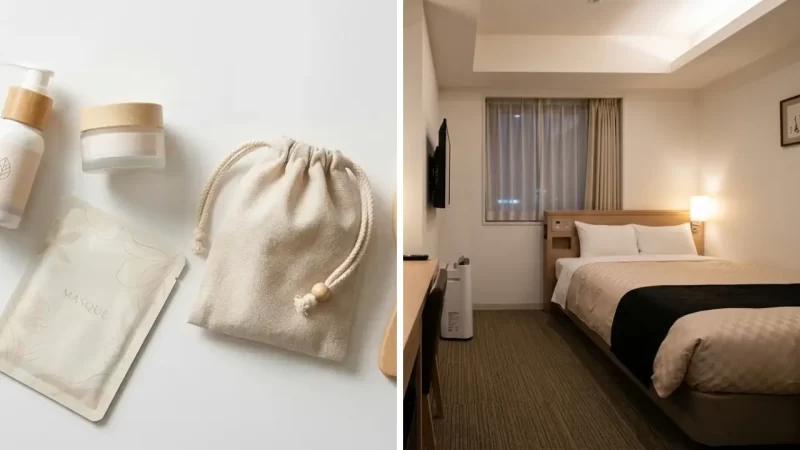
This guide is for you if:
- You’re traveling alone in Japan and want to know your options for safe, women-only accommodation
- You’ve heard of “women-only floors” at Japanese hotels and want to understand how they actually work
- You want to know the difference between a ladies’ plan, a women-only room, and a women-only floor
- You’re looking for practical advice on how to find and book these rooms from outside Japan
Most countries don’t have anything quite like this. At thousands of business hotels across Japan, you can book a floor where only women are permitted — and the elevator physically won’t stop there unless you have the right key card. It’s not a marketing label. It’s a structural security feature, built into how the building works.
This guide explains how women-only floors and ladies’ plans work at Japanese business hotels, what’s included, and how to find one for your stay.
- Three Types of Women-Only Options at Japanese Hotels
- What the Women-Only Floor Security Actually Looks Like in Japan
- What’s Included in a Japanese Ladies’ Plan
- How to Find a Women-Only Floor in Japan — Practical Booking Advice
- A Note on What “Ladies’ Floor” Means Versus “Women-Only Floor”
- Is a Women-Only Floor Worth Booking in Japan?
- What About Women-Only Capsule Hotels in Japan?
- Related Guides
Three Types of Women-Only Options at Japanese Hotels
The terminology can be confusing because Japanese hotels use several overlapping terms. Here’s what each one actually means:
| Japanese term | English equivalent | What it means |
|---|---|---|
| レディースプラン | Ladies’ plan | A room booking with extra amenities for women — better skincare products, hair tools, sometimes late checkout. The room itself may or may not be women-only. |
| 女性専用ルーム | Women-only room | A specific room that only women can book. Not necessarily on a dedicated floor — other rooms on the same floor may be available to anyone. |
| 女性専用フロア | Women-only floor | An entire floor restricted to women guests. The strongest security option: in most cases, the elevator will not stop at that floor unless you insert a key card issued to women-only floor guests. |
All three options are open to any woman — solo travelers, and groups. You don’t need to be traveling alone to book them.
What the Women-Only Floor Security Actually Looks Like in Japan
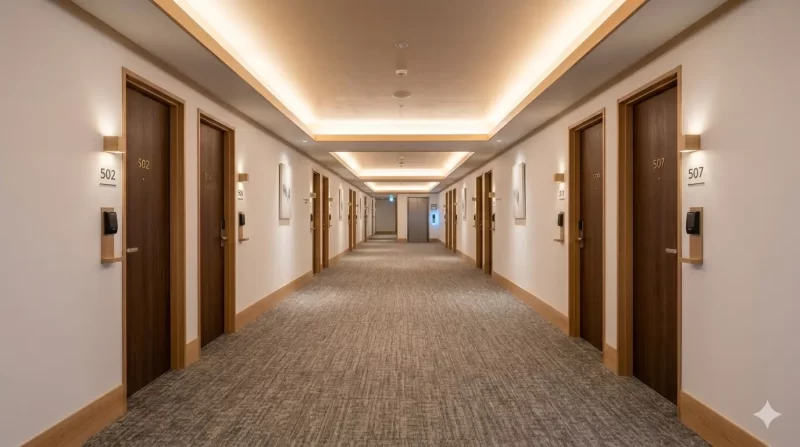
The elevator restriction is the key feature, and it’s worth explaining clearly because it’s genuinely different from what most hotels offer elsewhere.
On a standard hotel floor, anyone can ride the elevator to any floor and walk the corridor. On a women-only floor in Japan, the elevator requires a key card to stop at that level. A guest without the correct card cannot reach the floor — not by mistake, not on purpose. The card is issued only to guests staying on that floor.
This means the corridor outside your room is, in practice, accessible only to other women staying on the same floor and hotel staff. For solo travelers who have concerns about security, it’s a meaningful difference from a standard room.
What’s Included in a Japanese Ladies’ Plan
Amenities
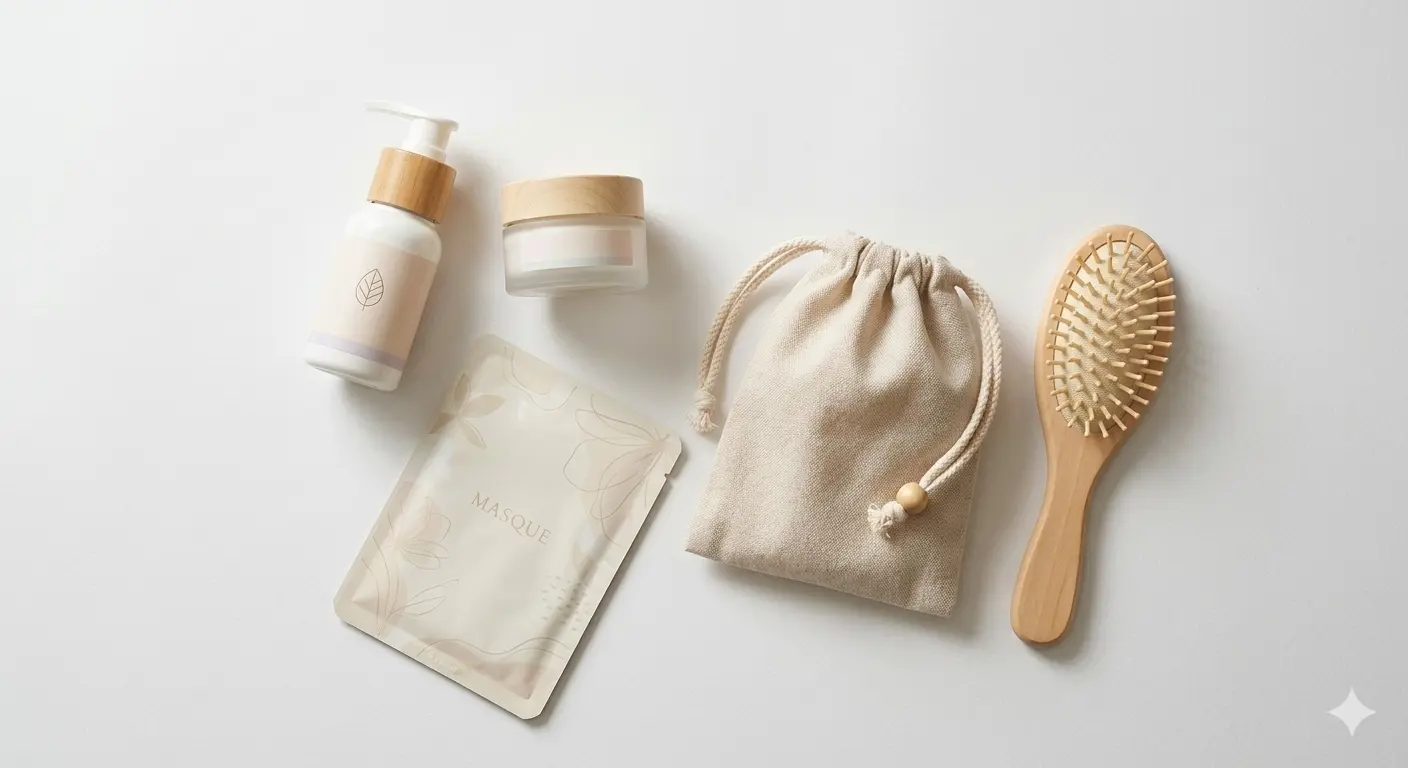
Ladies’ plans typically come with an upgraded amenity set: skincare products from recognizable Japanese brands (face wash, lotion, moisturizer), hair care items, bath additives, and face masks. These are brands you might not buy for yourself but would enjoy trying — it’s one of the small pleasures of the ladies’ plan format.
In-room equipment
Women-only rooms often include a larger mirror or dedicated vanity space, and sometimes beauty appliances: a Panasonic Nanoe hair dryer, a straightener, or a facial steamer. Carrying these items takes up luggage space, and having them in the room is a practical convenience for a multi-city trip.
Security
As described above: elevator key card access to the floor is the baseline. Some hotels add additional measures — a women’s-only front desk check-in lane, security cameras in all corridors on the floor, or a dedicated concierge service.
Additional perks
Depending on the hotel and the specific plan, a ladies’ plan may also include late checkout, a dining credit, a discount at an in-house spa or salon, or afternoon tea. These vary significantly by property — read the plan details carefully when booking.
Room condition
One thing we’ve noticed after years of staying in these rooms: ladies’ plan rooms tend to be in noticeably better condition than equivalent standard rooms. The restricted access and smaller pool of eligible guests means less wear, and the rooms often look and feel newer than their age would suggest. This isn’t guaranteed, but it’s a consistent pattern.
How to Find a Women-Only Floor in Japan — Practical Booking Advice
On Japanese booking sites (Jalan, Rakuten Travel)
The most complete selection is on Japanese OTA sites. Search for 女性専用ルーム (women-only room) or 女性専用フロア (women-only floor) on Jalan or Rakuten Travel. You can filter by region, city, or station. Both sites are in Japanese, but Google Chrome’s built-in translation handles them well — right-click anywhere on the page and select “Translate to English.”
On international booking sites
Agoda and Booking.com list many Japanese hotels in English, but not all properties display their women-only floor as a separate room type — some list it only on Japanese booking sites or their official website. That said, the hotels below have women-only floor room types clearly listed on Agoda, so you can see exactly what you’re booking.
- Keio Presso Inn Ikebukuro — Ikebukuro, Tokyo
- KEIKYU EX INN Higashi-Ginza — Ginza area, Tokyo
- Hotel Route Inn Shinagawa Oimachi — Shinagawa, Tokyo
- Hotel Gracery Tamachi — Tamachi, Tokyo
- KOKO HOTEL Ueno Station — Ueno, Tokyo
- New Osaka Hotel Shinsaibashi — Shinsaibashi, Osaka
- DEL style Osaka Higashitemma by Daiwa Roynet Hotel — Osaka (women-only elevator to large bath included)
- Sun Days Inn Kagoshima — Kagoshima
Note: Agoda links above go to each hotel’s booking page. Once there, look for “Ladies Floor” or “Female Only” in the room type list. It takes some navigation, but it’s worth it — you can confirm the room type and exact price before committing. Availability depends on dates.
APA Hotel’s dedicated women’s page
APA Hotel — Japan’s largest business hotel chain — has a dedicated women’s page on their official website (Japanese) listing their properties with women-only options, including details on amenities, room types, and non-smoking floors. Use Chrome’s translate function to navigate it.
Super Hotel’s Lohas Ladies page
Super Hotel — a chain known for its natural mineral baths at many locations — runs a similar dedicated page, Lohas Ladies (Japanese), listing properties with women-only floors and upgraded amenities. Japanese only, but Chrome translate handles it just as well.
A Note on What “Ladies’ Floor” Means Versus “Women-Only Floor”
Japanese hotels frequently use “ladies’ floor” as their official English term — you’ll see it in booking descriptions, on hotel signage, and in OTA listings. It means the same thing as “women-only floor.” The term sounds slightly formal in modern English, but it’s worth knowing because searching for “ladies floor Japan hotel” will find results that “women-only floor” might miss.
In short: ladies’ floor = women-only floor. Use both terms when searching.
Is a Women-Only Floor Worth Booking in Japan?
For solo female travelers, yes — and not just for security reasons. The amenity upgrades alone often justify the small price difference over a standard room (typically 500–1,500 yen more). The elevator restriction gives genuine peace of mind if you’re arriving late, leaving early, or just prefer knowing who has access to your corridor.
Japan is consistently ranked among the safest countries for solo female travel, and incidents at business hotels are rare. The women-only floor system isn’t a response to danger — it’s a proactive comfort feature that the Japanese hospitality industry developed because it genuinely improves the experience. Think of it as the hotel equivalent of a priority boarding lane: you don’t use it because you’re scared of the queue, you use it because it’s smoother.
From experience
We’ve been covering Japanese hotels for over 30 years. Women-only floor options have become significantly more common in the past decade — most major business hotel chains now offer them at select properties, and the amenity quality has improved considerably. If you’re choosing between two otherwise equal hotels for a solo trip, the one with a women-only floor is almost always the better choice.
What About Women-Only Capsule Hotels in Japan?
If you search for women-only accommodation in Japan on international booking sites, capsule hotels will dominate the results — and some of them are genuinely good. Nadeshiko Hotel Shibuya is a well-known fully women-only property in Tokyo, and similar options exist in Osaka and other major cities. These are legitimate choices, especially for very short stays or tight budgets.

Nadeshiko Hotel Shibuya -Women Only photo on agoda
That said, there are a few things worth knowing before you choose a capsule over a business hotel:
- No locked door. Capsule pods are separated by curtains or sliding panels, not lockable doors. You’re in a private space, but it’s not a sealed room.
- Noise travels. Voices, phone calls, and movement from neighboring pods carry more than you might expect. Some capsule hotels and cabin-style accommodations provide earplugs at the front desk — which tells you something.
- Luggage space is limited. Most capsules offer a locker, not in-pod storage. If you’re traveling with a full suitcase, managing it gets awkward.
- No breakfast. Capsule hotels rarely include meals. A business hotel with free breakfast is a meaningfully different morning.
- Rules vary. Some properties require guests to vacate rooms during cleaning hours (often 10 AM–4 PM). A business hotel room is yours until checkout.
For a first trip to Japan, or if you’re staying more than one night and have luggage with you, a business hotel with a women-only floor gives you a private locked room, in-room bathroom, free breakfast at many chains, and elevator-access security — at a price that’s often only a few thousand yen more per night than a capsule. The comparison looks different once you add it up.
Related Guides
For an overview of Japanese business hotels — how they work, what to expect, and how to book:
Japanese Business Hotels: A Practical Guide for Foreign Travelers
For a comparison of major hotel chains, including which ones offer women-only options:
Best Business Hotel Chains in Japan Compared — A Side-by-Side Guide