


This guide is for you if:
- You want to know which Japanese hotel chains include free breakfast — and which don’t
- You’re wondering whether to pay for the hotel breakfast or just go to 7-Eleven
- You’ve never eaten a Japanese hotel breakfast buffet and want to know what to expect
Where to eat breakfast in Japan depends almost entirely on which hotel you’re in. Get the answer wrong and you’ll either pay for something you could have had free, or walk past a great buffet to queue at a convenience store. This guide cuts straight to it.
- The Quick Answer: It Depends on Your Hotel
- Free Breakfast at Japanese Business Hotels — Just Eat Here
- Paid Breakfast in Japan — When It’s Worth It (and When It Isn’t)
- The Convenience Store Option — Genuinely Good
- Gyudon Chains — Open Early, Cheap, Filling
- What’s on a Japanese Breakfast Buffet? A Quick Guide
- One Dish That Often Surprises Foreign Guests
- Related Guides
The Quick Answer: It Depends on Your Hotel
| Your situation | Best choice |
|---|---|
| Staying at Toyoko Inn, Route Inn, Comfort Hotel, or Super Hotel | Eat at the hotel — it’s free and perfectly good |
| Staying at Dormy Inn | Eat at the hotel — the breakfast is exceptional and worth every yen |
| Staying at a standard APA Hotel | Hotel if it suits you, convenience store if not — see below |
| Staying somewhere with no breakfast, or you’re skipping it | Convenience store or gyudon chain |
Free Breakfast at Japanese Business Hotels — Just Eat Here
Several major chains include breakfast in the room rate, no upgrade required. If you’re at one of these, there’s little reason to go out. A hot buffet in your hotel is a more comfortable start to the day — and it’s already included in what you paid.
Toyoko Inn
Breakfast is included with every stay, but the format varies by property. Toyoko Inn runs three different styles: a small buffet (rice, bread, miso soup, salad, boiled egg), a filled onigiri style (rice balls with a drink), and a sandwich style. Which one you get is listed on each property’s page on the Toyoko Inn website — worth a quick check before you arrive if the format matters to you. All three are free. Don’t expect variety — expect reliability.
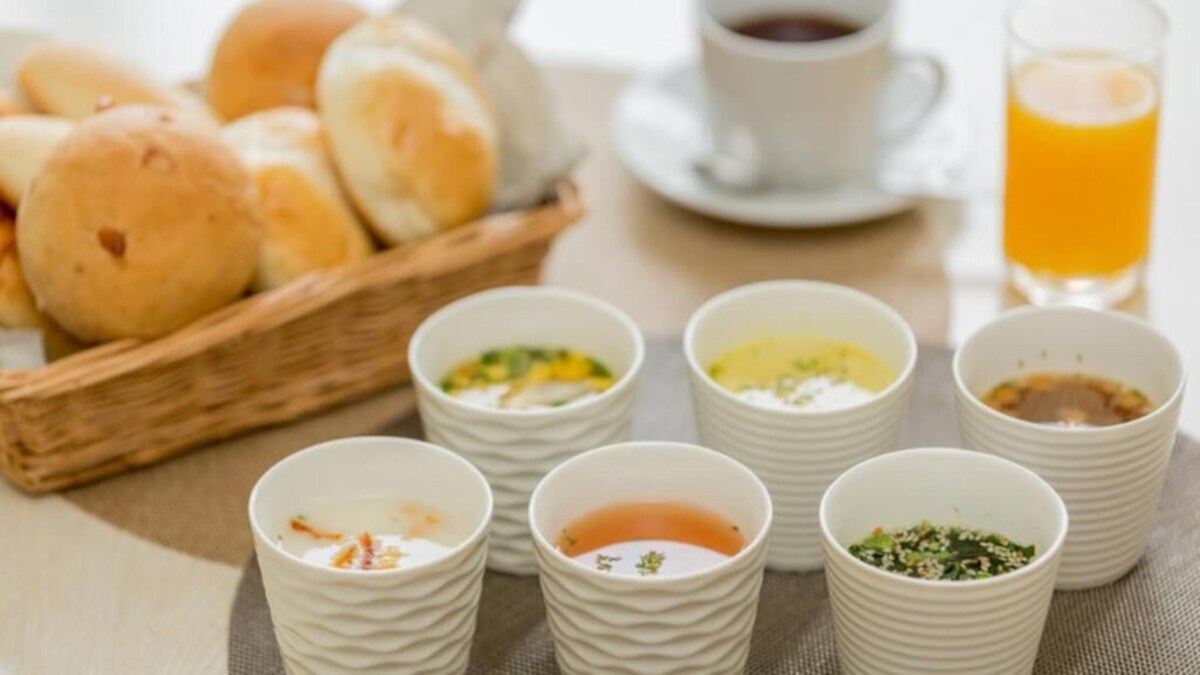
Toyoko Inn Takamatsu Ekimae — photo on Expedia
Route Inn
The best free breakfast of any business hotel chain in Japan. Thirty or more items, both Japanese and Western, in a full buffet. Grilled fish, rice, miso soup, natto, salad, soup, bread, eggs. If eating well in the morning matters to you, Route Inn is the chain to choose.
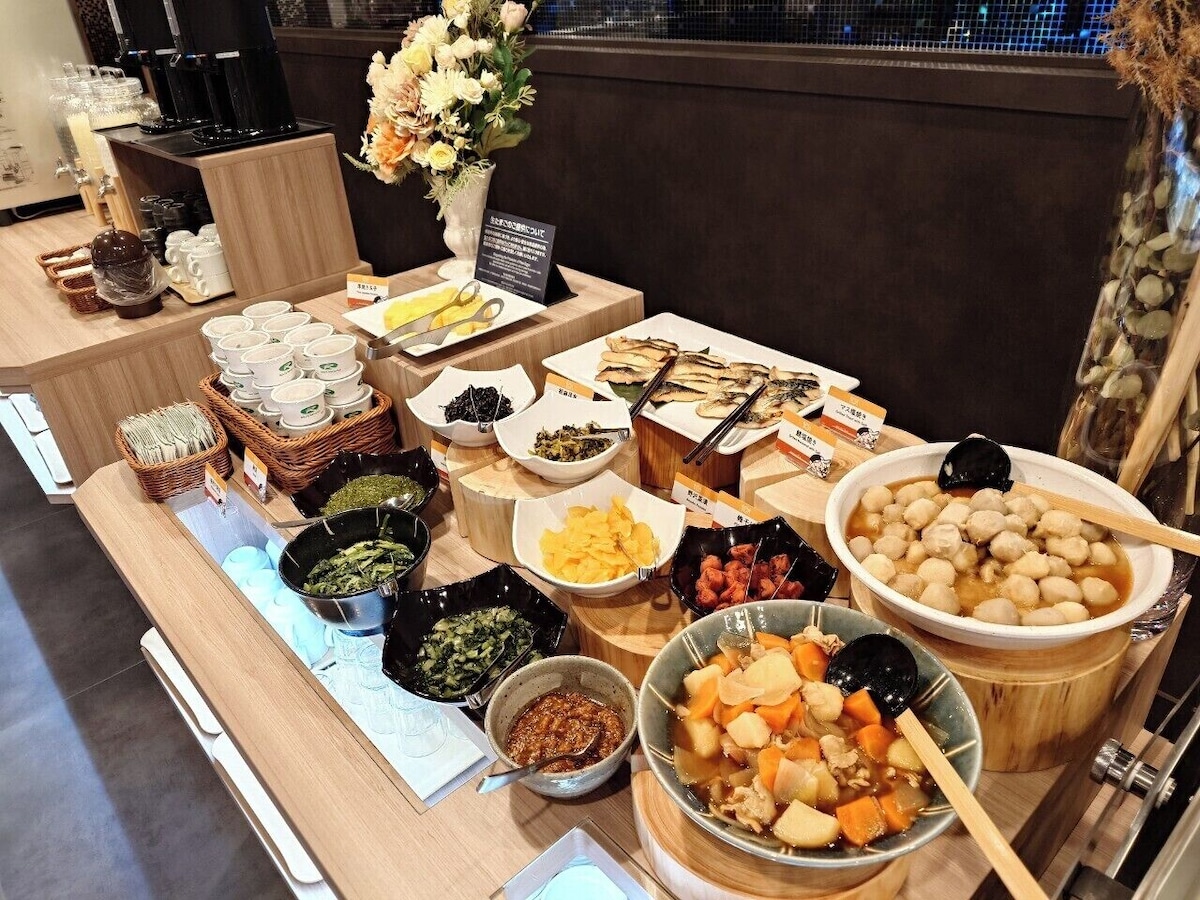
Hotel Route Inn Grand Fukushima Ekimae — photo on Expedia
Comfort Hotel
Western-leaning: bread, salad, soup, sausage, yogurt. The Library Cafe lounge doubles as the breakfast room, which makes it a pleasant place to start the day. A good choice for travelers who aren’t ready for rice and fish at 7 AM.
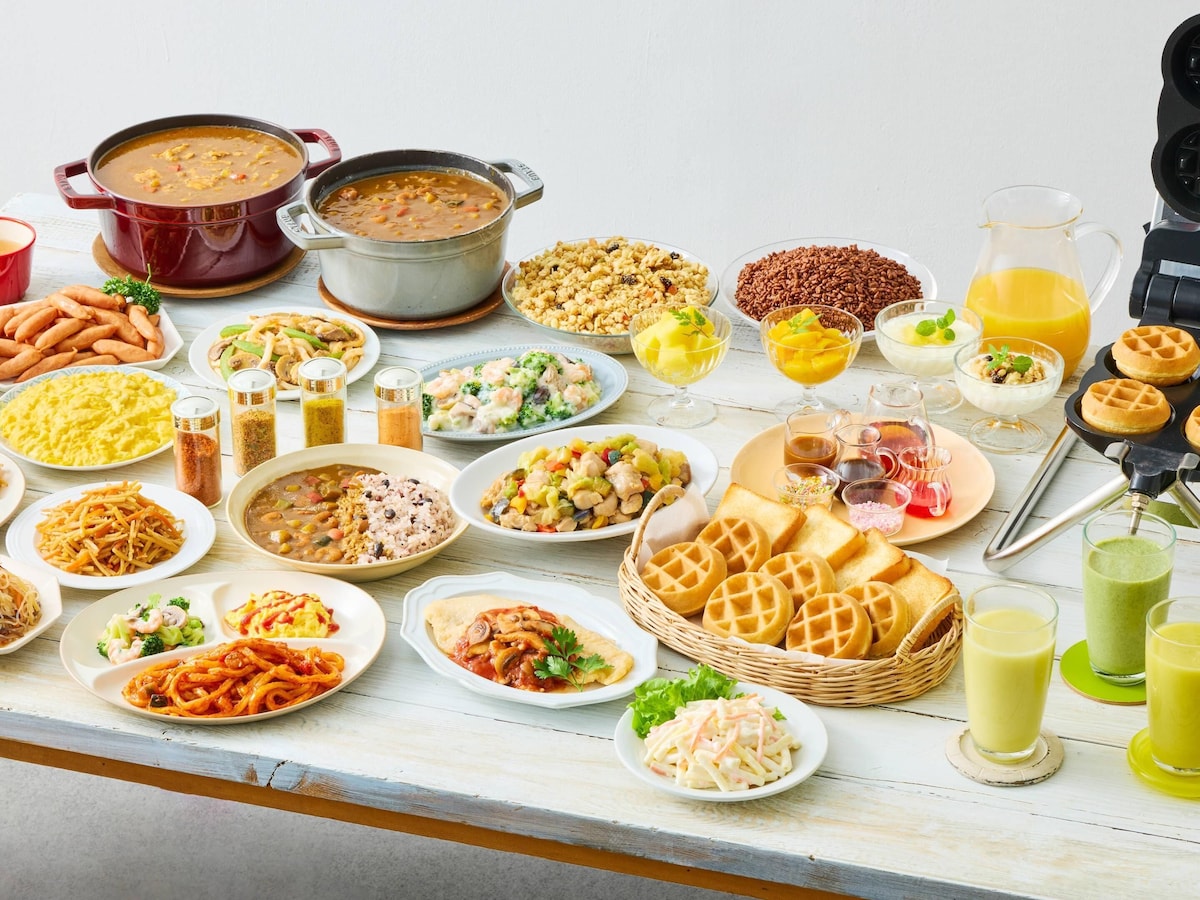
Comfort Inn Karuizawa — photo on Expedia
Super Hotel
Organic vegetables, a varied hot and cold selection, and at some locations, freshly baked bread (check before you get your hopes up — not every property has the oven). Tends to attract health-conscious travelers and delivers accordingly.
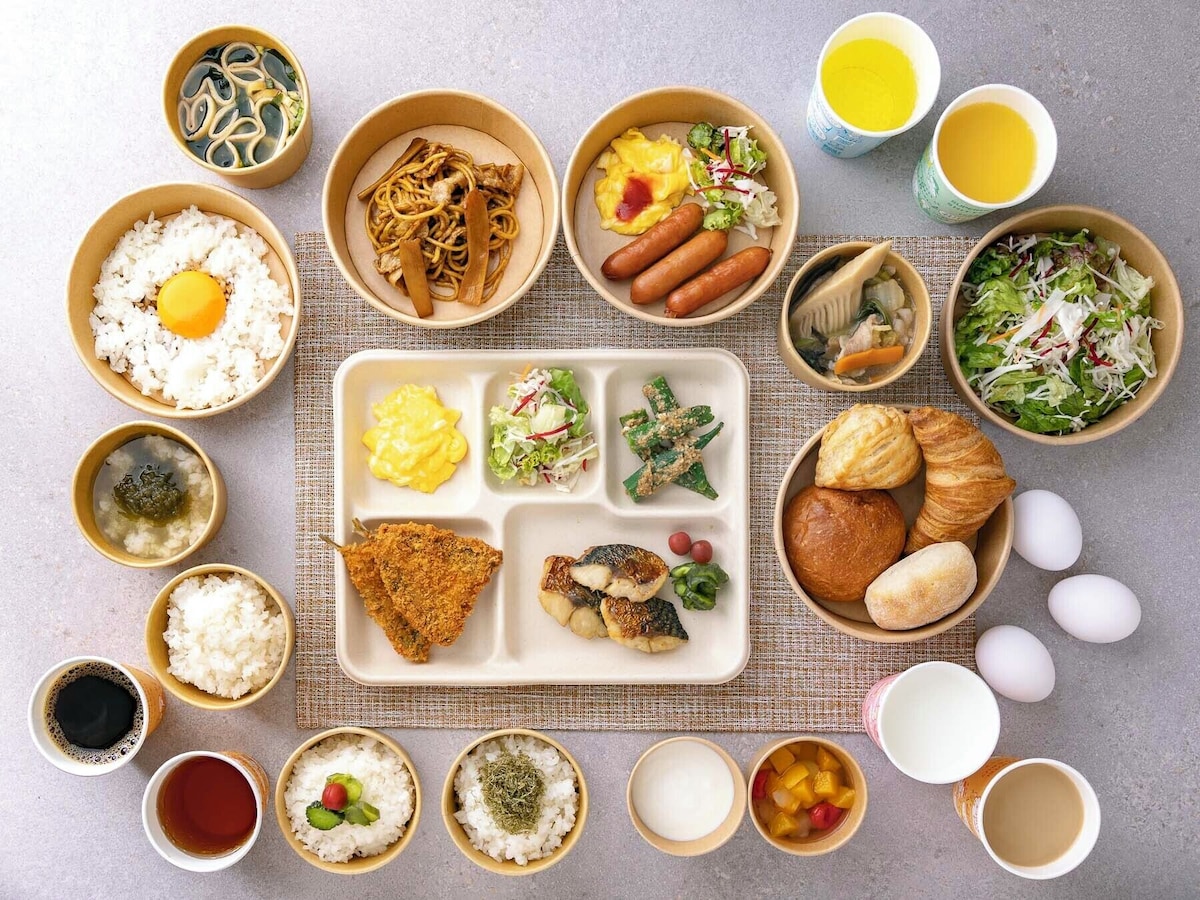
Super Hotel Premier Toyama Castle Park — photo on Expedia
Paid Breakfast in Japan — When It’s Worth It (and When It Isn’t)
Dormy Inn — Worth every yen
Dormy Inn charges 1,500–2,000 yen for breakfast, and it’s the one case where we’d tell you to pay without hesitation. The breakfast features regional specialties sourced from wherever you’re staying: in Hokkaido, that’s a seafood rice bowl where you pile on ikura (salmon roe) to your heart’s content; in Nagoya, hitsumabushi-style eel; in Fukuoka, mentaiko (spicy seasoned roe) — the city’s most famous food souvenir, and here it comes with your rice as part of breakfast.
You won’t find this quality at this price point anywhere else. The paid breakfast at Dormy Inn is, for many guests, the highlight of the stay.
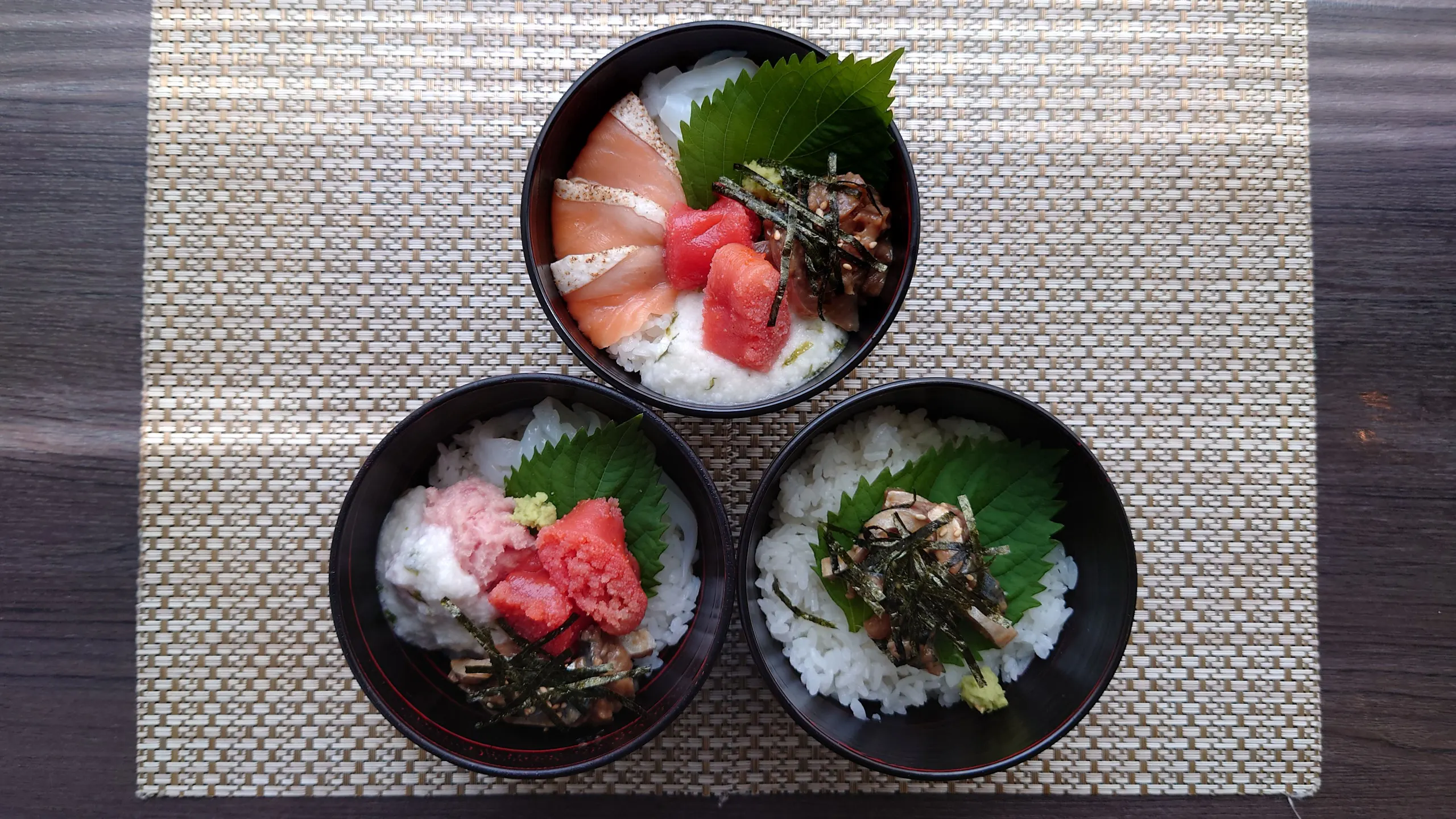
Dormy Inn Hakata Gion — photo on Ikyu | Book on Booking.com
APA Hotel — Variable, and here’s why
Standard APA Hotels don’t run their own restaurant. Instead, they lease the dining space to a local tenant — it could be an izakaya, a bistro, a Thai restaurant, an Indian curry place. The tenant follows some shared rules (expect APA’s house curry to make an appearance), but the setting varies by location.
The breakfast itself is usually a standard Japanese morning spread, but the room and atmosphere depend entirely on which restaurant happens to be in that building. Some guests find this charming. Others would prefer predictability — in which case, see the convenience store section below.
Note: APA Hotel Tower and APA Hotel Resort properties operate at a higher tier and offer more consistent, in-house dining.
APA Hotel Suidobashi Ekimae — photo on Expedia
The Convenience Store Option — Genuinely Good
Japan’s convenience stores — 7-Eleven, FamilyMart, Lawson — are not like convenience stores elsewhere. The food is fresh, changes seasonally, and is made for eating on the go or at the eat-in counter some stores have.
For breakfast, the practical options are:
- Onigiri — rice balls in various fillings (salmon, tuna mayo, pickled plum). Good as they are; ask staff to heat one if you prefer it warm.
- Sandwiches — egg salad, BLT, katsu — always fresh, never sad
- Hot foods counter — steamed buns, fried chicken; in winter, nikuman (meat buns) and oden (fish cakes, tofu, daikon simmered in dashi broth — available to eat in or take away)
- Instant miso soup — pour hot water from the in-store dispenser
- Yogurt, fruit cups, coffee — if you want something light
Convenience stores make the most sense when: your hotel charges for breakfast and you don’t want to pay, you have an early train and the hotel dining room isn’t open yet, or you just want to graze rather than sit down.
Gyudon Chains — Open Early, Cheap, Filling
Yoshinoya, Matsuya, and Sukiya all serve morning sets from around 5 AM. For about 600 yen, you get: grilled salmon, steamed rice, miso soup, pickles, and a soft-boiled egg. It’s a proper sit-down breakfast — order at the touchscreen terminal, then collect your tray when your number is called.
This option makes sense when your hotel has no free breakfast and you want something hot and filling without spending 1,500 yen on a hotel spread. It does not make sense when you’re already at Route Inn and the buffet opens in ten minutes.
What’s on a Japanese Breakfast Buffet? A Quick Guide
If you’re new to the Japanese morning meal, here’s what you’ll commonly find — and what to do with it.
| Japanese | What it is | How to eat it |
|---|---|---|
| ごはん (gohan) | Steamed white rice | The foundation of the meal. Eat with everything else. |
| 味噌汁 (miso shiru) | Miso soup — fermented soybean paste broth with tofu, wakame seaweed | Drink from the bowl, or use the small spoon provided |
| 焼き魚 (yakizakana) | Grilled fish — usually salmon, sometimes mackerel or horse mackerel | Eat the flesh, leave the bones and skin on the plate |
| 玉子焼き (tamagoyaki) | Sweet rolled omelette, slightly firm | Eat as-is. It’s sweeter than a Western omelette. |
| 温泉卵 (onsen tamago) | Slow-cooked egg, soft white with runny yolk | Pour over rice, add a little soy sauce if available |
| 納豆 (natto) | Fermented soybeans — sticky, strong smell | Mix vigorously, pour over rice. Not for everyone, but very Japanese. |
| 海苔 (nori) | Dried seaweed sheets | Wrap around a bite of rice. Eat immediately — it softens quickly. |
| 漬物 (tsukemono) | Japanese pickles — various vegetables | Small portion as a side, not meant to be a main dish |
| おかゆ (okayu) | Rice porridge — thin, gentle, easy on the stomach | Add salt, pickles, or the toppings provided. Good after a long journey. |
One Dish That Often Surprises Foreign Guests
We were staying at a hotel recently where the morning menu featured multigrain rice, grilled mackerel, and a small jug of dashi broth — with no plain white rice on the buffet that day. The intended move was to pour the dashi over the rice and eat it like ochazuke (a Japanese dish of rice in broth). It was genuinely delicious.
A foreign guest at the next table looked at the setup for a long time, unsure of what to do with any of it.
The lesson: if something on the buffet doesn’t look like it fits together, it probably does. Pour things over rice. Add the broth. Try it. Japanese hotel chefs know what they’re doing, and the combinations that look strange usually taste good. You’re allowed to ask the staff too — in our experience, they’re happy to demonstrate.
Breakfast content and quality vary more than most travelers expect between chains — and sometimes between properties within the same chain. Before you book, it’s worth looking up the breakfast photos for your specific hotel. Most Japanese booking sites include them, and a quick look sets the right expectations before you arrive.
About this guide
We’ve been covering Japanese travel for over 30 years, and we eat a lot of hotel breakfasts. The recommendations here come from actual stays across Japan — not aggregated review scores. When we say Dormy Inn’s breakfast is worth paying for, we mean it.
Related Guides
For a broader look at Japanese business hotel chains — what they are, how they compare, and what to expect — see the main guide: