
This guide is for you if:
- You’re wondering whether Japanese hotels provide pajamas or nightwear
- You’ve heard about yukata and want to know what it is and how to wear it
- You want to know the etiquette — can you walk around the hotel in a yukata?
- You’re packing for Japan and trying to decide whether to bring sleepwear
One of the small surprises of staying at a hotel in Japan is finding sleepwear waiting for you in the room. Whether it’s a yukata, a pajama set, or something in between, most Japanese hotels provide nightwear as a standard amenity. You don’t need to pack your own pajamas.
That said, there are a few things worth knowing — what you’ll actually get varies by hotel type, wearing a yukata takes a bit of know-how, and the etiquette around hotel sleepwear in Japan is different from what you might expect.
Do Japanese Hotels Provide Pajamas?
Yes. Almost every hotel in Japan provides some form of sleepwear. The type depends on the hotel:
| Hotel Type | What You’ll Typically Get |
|---|---|
| Business hotels | Yukata (cotton robe) or a one-piece nightgown-style garment. Some chains provide two-piece pajama sets. |
| Ryokans (traditional inns) | Yukata, often in a nicer fabric. Some high-end ryokans offer seasonal designs. |
| Luxury hotels | Pajama sets or bathrobes, typically higher quality. |
| Capsule hotels | Usually provided, but less guaranteed. Check in advance. |
At Japanese business hotels, the provided sleepwear is free to use during your stay. It’s laundered between guests, just like the towels and sheets.
Yukata vs. Pajamas — What’s the Difference?
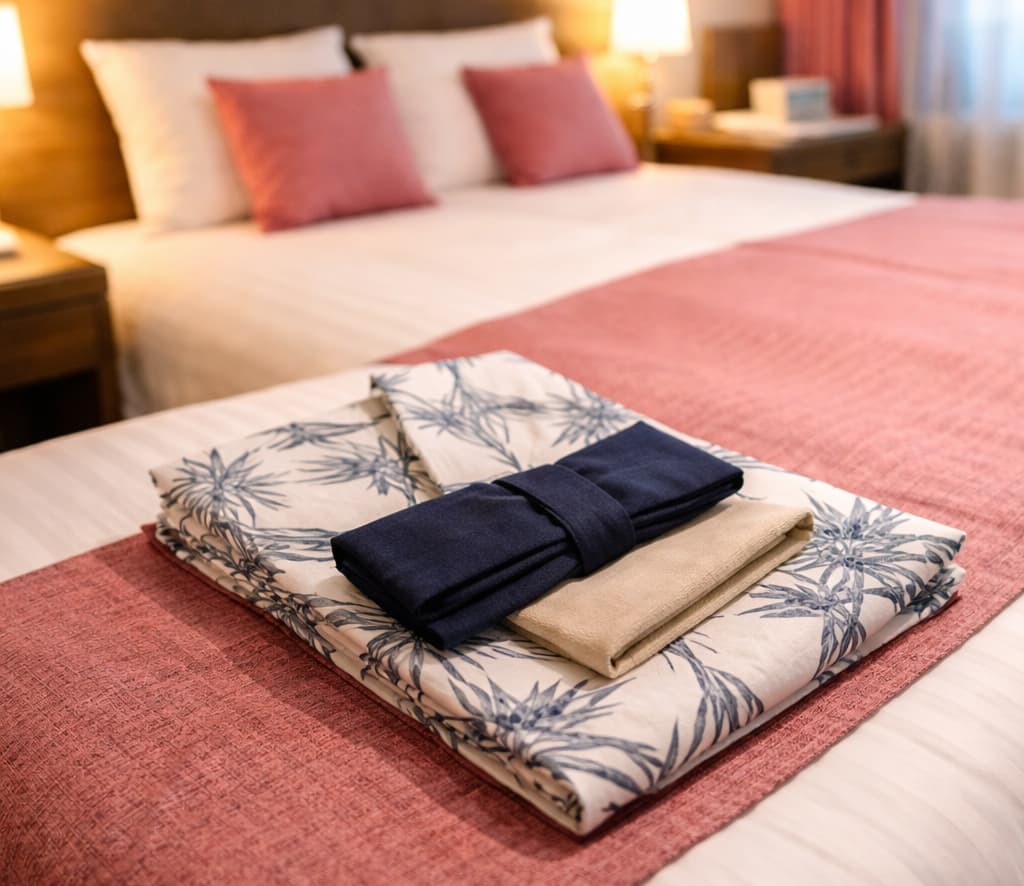
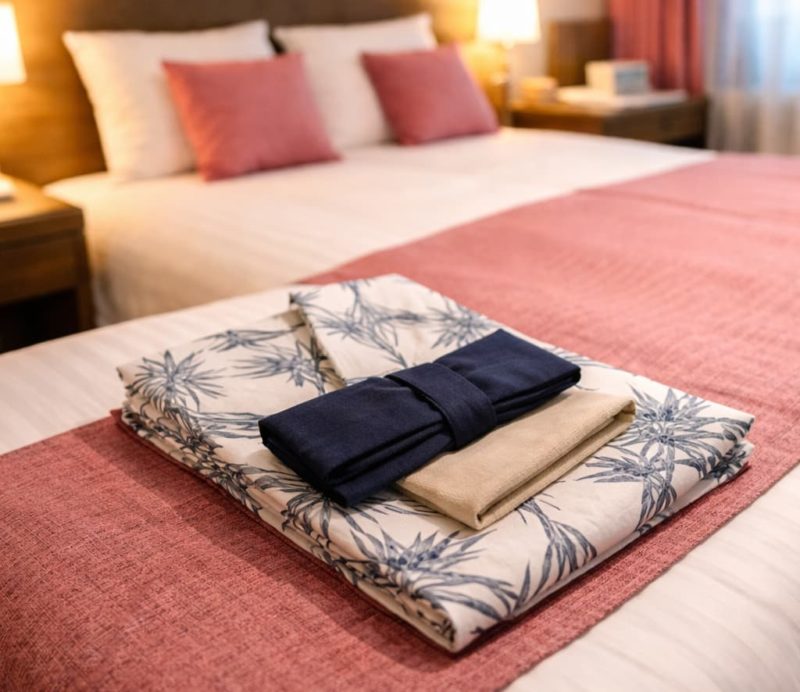
A yukata is a lightweight cotton robe, tied with a sash (obi) at the waist. It’s a single piece that wraps around your body — left side over right. This is the traditional sleepwear at Japanese hotels, and it’s what you’ll find in many business hotels and virtually all ryokans.
The main complaint about yukata: they come untied while you sleep. You’ll likely wake up with the robe open and your stomach exposed. If the room is well-heated, this is just amusing. In winter, it can mean a cold and uncomfortable night.
Some business hotel chains have moved to two-piece pajama sets (a top and pants) specifically because of this issue. The two-piece style stays in place better and keeps your body covered through the night. If this matters to you, look for hotels that specifically mention “pajamas” or “separate-type nightwear” on their website.
Business hotels in Japan with notable pajamas
Dormy Inn
Dormy Inn provides what they call “kannai-gi” (literally “in-building wear”) — a comfortable set designed for wearing anywhere in the hotel, including the onsen bath area, the dining room, and the lobby. Unlike most business hotels where sleepwear is for your room only, Dormy Inn’s relaxed dress code is part of the experience.

"Can I wear the room wear to the bath?" — Dormy Inn Kawasaki FAQ [Check availability on Jalan]
Dormy Inn Hotels in Japan [Check Availability on Booking.com]
Sotetsu Fresa Inn
Sotetsu Fresa Inn is known in Japan for its waffle-weave two-piece pajamas. The textured fabric doesn’t stick to your skin and offers decent warmth despite being lightweight. They’re popular enough that guests regularly ask if they can buy a set to take home.

Can You Wear a Yukata Outside Your Room in Japan?
This depends entirely on the type of hotel.
Yukata etiquette at Japanese hotels
- Ryokans: Yes — you can wear your yukata everywhere. To dinner, breakfast, the bath, around the building, and in traditional onsen towns, even for a walk outside on the street.
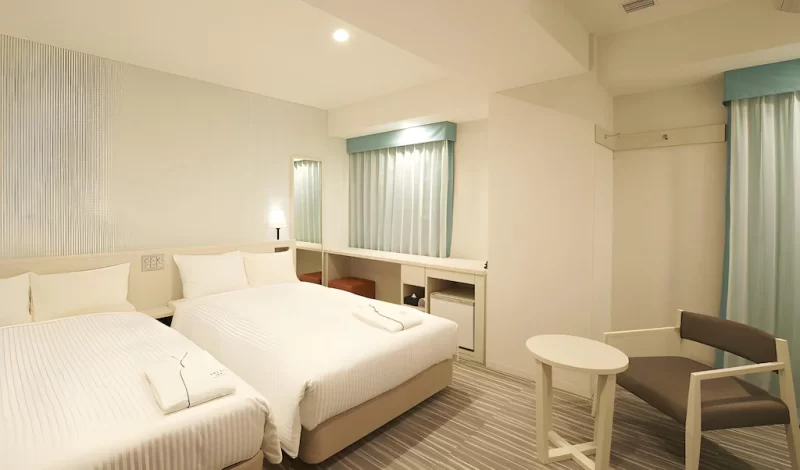
- Business hotels: No — sleepwear is for your room only. Wearing pajamas or a yukata to the breakfast area, lobby, or hallways is considered poor etiquette. The exception is Dormy Inn, where their “kannai-gi” is designed for the entire building.
- Luxury hotels: Robes are for the room and spa area only. Do not wear them to the restaurant.
The key takeaway: at a ryokan, relax and wear your yukata everywhere. At a business hotel, change into your regular clothes before leaving your room.
Can You Take Robes From Hotels in Japan?
No. The yukata, pajamas, and robes provided at Japanese hotels are hotel property, not souvenirs. They are returned, laundered, and reused for the next guest. Taking them is the same as taking hotel towels — it’s not something you should do.
If you really love the yukata or pajamas at a particular hotel, some properties sell them in their gift shop. Dormy Inn, for example, sells their “kannai-gi” through their online store. You can also buy yukata at souvenir shops throughout Japan — they make a great, lightweight gift.
How to Wear a Yukata
If your hotel provides a yukata, here’s the only rule that truly matters:
The golden rule
Left side over right. Always. Wrap the right side of the yukata against your body first, then fold the left side over it. Tie the obi sash around your waist to hold it in place.
Right-over-left is reserved for dressing the deceased in Japanese funeral tradition. Getting this wrong will draw stares. Left over right, and you’re fine.
Don’t worry too much about looking elegant — hotel yukata are casual wear, not formal kimono. Japanese people wear them loosely and comfortably. The sash just needs to hold the robe closed. Nobody is judging your technique.
Yukata Too Cold? What to Do
If the room is warm enough, a yukata is perfectly fine for sleeping. But in winter, or if you tend to feel cold, the yukata’s tendency to come untied in the night can be a problem.
A few practical solutions:
- Wear a long-sleeved shirt underneath. This is what many experienced Japanese travelers do. A simple undershirt or thermal layer worn under the yukata keeps you warm and doesn’t add much to your luggage.
- Bring lightweight pajamas. If you know you’ll be uncomfortable in a yukata, pack a thin pair of pajamas. They take up minimal suitcase space.
- Check the hotel’s website before booking. Look under “Room” or “Amenities” for mentions of “pajamas” or “nightwear.” If they specifically say pajamas (not yukata), you’ll get a two-piece set that stays in place.
One more tip: when you arrive at your room, locate the yukata or pajamas before you take a shower. They might be folded on the bed, or tucked away in a closet or desk drawer. Finding them while you’re already wet and cold is an experience you only need to have once.
For more about staying at Japanese business hotels — what to expect, which chains to choose, and how to book — see the complete guide:
Japanese business hotel guide for foreign travelers

An eSIM lets you connect the moment you land in Japan — no SIM swap, no airport queue.
Use code RYOKONEW for 15% off your first order, or RYOKO for 10% off if you have used Airalo before.